Think about how much time you spend scrolling every day.
Now imagine redirecting just 30–60 minutes of that time toward something that could improve your future.
You could:
• Learn a valuable digital skill
• Build a blog
• Create useful content
• Research a profitable niche
• Start a side project
• Build your personal brand
• Develop a digital product
The internet can either consume your attention or help you build something valuable.
The difference is what you choose to do with it.
Think of your attention like money. If you spend every dollar, you have nothing left to invest. The same applies to your time and attention.
A skill can create opportunities. A useful post can connect you with someone. A blog article can continue attracting readers long after you publish it. Your knowledge can eventually become a product, service, or source of income.
You don't have to quit social media or become an influencer.
Start by asking yourself:
“What can I learn, create, or build today?”
Because your attention is already an asset.
Spend it carefully. Invest it intentionally. Build something valuable with it.
What would you rather spend more time doing online—learning, creating, or building? 👇
💡 If you're thinking about turning your time online into something you can actually build from, I put together a practical resource to help you get started.
The $1,500 Creator — Monetization Roadmap walks you through a 30-day framework for creating content, building your digital presence, and exploring practical ways to monetize what you create.
👉 Explore it here: https://sensediary.com/monetization-roadmap/
#Blogging #ContentCreation #SideHustle #OnlineBusiness #CreatorEconomy
Friday, September 11, 2026

Thursday, September 10, 2026
❤️ PERSONAL GROWTH | STOP WAITING FOR MOTIVATION
You don't always need motivation.
Sometimes you need a system.
Think about brushing your teeth.
You don't wake up every morning asking, “Am I motivated to brush my teeth today?”
You simply do it.
That's the power of habits.
When something becomes part of your routine, you don't have to negotiate with yourself every time.
The same principle applies to reading, exercising, saving money, learning, praying, writing, or building a business.
Don't depend entirely on how you feel.
Create routines that make progress easier.
Motivation can start the journey.
Consistency carries it.
👉 We've shared practical strategies for turning good intentions into sustainable habits on the SenseDiary blog.
💬 What's one habit you'd love to make automatic?
#PersonalGrowth #Habits #Consistency #GrowthMindset
Sometimes you need a system.
Think about brushing your teeth.
You don't wake up every morning asking, “Am I motivated to brush my teeth today?”
You simply do it.
That's the power of habits.
When something becomes part of your routine, you don't have to negotiate with yourself every time.
The same principle applies to reading, exercising, saving money, learning, praying, writing, or building a business.
Don't depend entirely on how you feel.
Create routines that make progress easier.
Motivation can start the journey.
Consistency carries it.
👉 We've shared practical strategies for turning good intentions into sustainable habits on the SenseDiary blog.
💬 What's one habit you'd love to make automatic?
#PersonalGrowth #Habits #Consistency #GrowthMindset
Wednesday, September 9, 2026
💰 Why Your Money Disappears
You receive your income.
You pay a few bills.
You buy a few things.
You help someone.
You make a couple of purchases that seemed small.
Then suddenly…
“Where did all my money go?”
If you've ever asked yourself that question, you're not alone.
Sometimes the problem isn't simply how much we earn. It's that we don't have a clear system for managing what we already have.
Small expenses can quietly become large expenses when repeated.
That daily coffee.
That impulse purchase.
That subscription you forgot about.
That “I'll pay for it later” purchase.
Individually, they don't seem dangerous.
Together, they can completely change your financial picture.
The good news?
You don't necessarily need to earn more money before you start managing money better.
You need awareness first.
💬 What's one expense you think people underestimate?
#PersonalFinance #MoneyManagement #FinancialFreedom #MoneyTips
You pay a few bills.
You buy a few things.
You help someone.
You make a couple of purchases that seemed small.
Then suddenly…
“Where did all my money go?”
If you've ever asked yourself that question, you're not alone.
Sometimes the problem isn't simply how much we earn. It's that we don't have a clear system for managing what we already have.
Small expenses can quietly become large expenses when repeated.
That daily coffee.
That impulse purchase.
That subscription you forgot about.
That “I'll pay for it later” purchase.
Individually, they don't seem dangerous.
Together, they can completely change your financial picture.
The good news?
You don't necessarily need to earn more money before you start managing money better.
You need awareness first.
💬 What's one expense you think people underestimate?
#PersonalFinance #MoneyManagement #FinancialFreedom #MoneyTips
Wednesday, September 2, 2026
If you think AI will automatically make you money, you’re probably approaching it the wrong way.
The biggest mistake people make with AI is assuming the tool itself is the opportunity.
It isn’t.
AI is not a magic ATM. It’s a leverage tool.
The people quietly building income online in 2026 aren’t necessarily the best programmers or biggest tech experts.
Many of them simply learned how to combine ordinary skills with powerful AI tools to solve real problems faster, better, and more efficiently.
And here’s the lesson many beginners overlook:
👉 AI rewards action-takers, not information collectors.
You don’t need to master ChatGPT, image generators, automation tools, video AI, and dozens of other platforms before you begin.
Trying to learn everything at once may actually keep you stuck.
Instead, start here:
1️⃣ Learn ONE income-focused skill
Writing. Graphic design. Video editing. Research. Social media management. Customer support. Automation.
Choose one skill businesses already pay for, then learn how AI can make you better at it.
2️⃣ Use AI to increase your productivity
The goal isn't to replace yourself with AI.
The goal is to work faster, improve your output, and create more opportunities with the time and skills you already have.
3️⃣ Solve problems people are willing to pay for
Businesses need content, leads, visibility, engagement, organization, customer support, and sales.
If you can use AI to help deliver those results more efficiently, you become valuable.
4️⃣ Start small before trying to scale
Your first income doesn't need to come from a massive AI business.
It could start with a freelance service, a simple content project, helping a small business, or completing your first paid task.
Start small. Learn. Improve. Repeat.
5️⃣ Don't let the hype distract you
AI trends will keep changing.
New tools will appear every week.
But the fundamentals remain the same:
Learn a valuable skill. Solve real problems. Create results. Stay consistent.
AI is changing the online economy faster than ever.
But the opportunity isn't reserved for people who know everything about technology.
It's increasingly available to people who are willing to learn, experiment, take action, and create value.
Don't just learn AI. Learn how to use AI to become useful.
It isn’t.
AI is not a magic ATM. It’s a leverage tool.
The people quietly building income online in 2026 aren’t necessarily the best programmers or biggest tech experts.
Many of them simply learned how to combine ordinary skills with powerful AI tools to solve real problems faster, better, and more efficiently.
And here’s the lesson many beginners overlook:
👉 AI rewards action-takers, not information collectors.
You don’t need to master ChatGPT, image generators, automation tools, video AI, and dozens of other platforms before you begin.
Trying to learn everything at once may actually keep you stuck.
Instead, start here:
1️⃣ Learn ONE income-focused skill
Writing. Graphic design. Video editing. Research. Social media management. Customer support. Automation.
Choose one skill businesses already pay for, then learn how AI can make you better at it.
2️⃣ Use AI to increase your productivity
The goal isn't to replace yourself with AI.
The goal is to work faster, improve your output, and create more opportunities with the time and skills you already have.
3️⃣ Solve problems people are willing to pay for
Businesses need content, leads, visibility, engagement, organization, customer support, and sales.
If you can use AI to help deliver those results more efficiently, you become valuable.
4️⃣ Start small before trying to scale
Your first income doesn't need to come from a massive AI business.
It could start with a freelance service, a simple content project, helping a small business, or completing your first paid task.
Start small. Learn. Improve. Repeat.
5️⃣ Don't let the hype distract you
AI trends will keep changing.
New tools will appear every week.
But the fundamentals remain the same:
Learn a valuable skill. Solve real problems. Create results. Stay consistent.
AI is changing the online economy faster than ever.
But the opportunity isn't reserved for people who know everything about technology.
It's increasingly available to people who are willing to learn, experiment, take action, and create value.
Don't just learn AI. Learn how to use AI to become useful.
Monday, August 17, 2026
Mental Health Awareness: Why It Matters More Than Ever
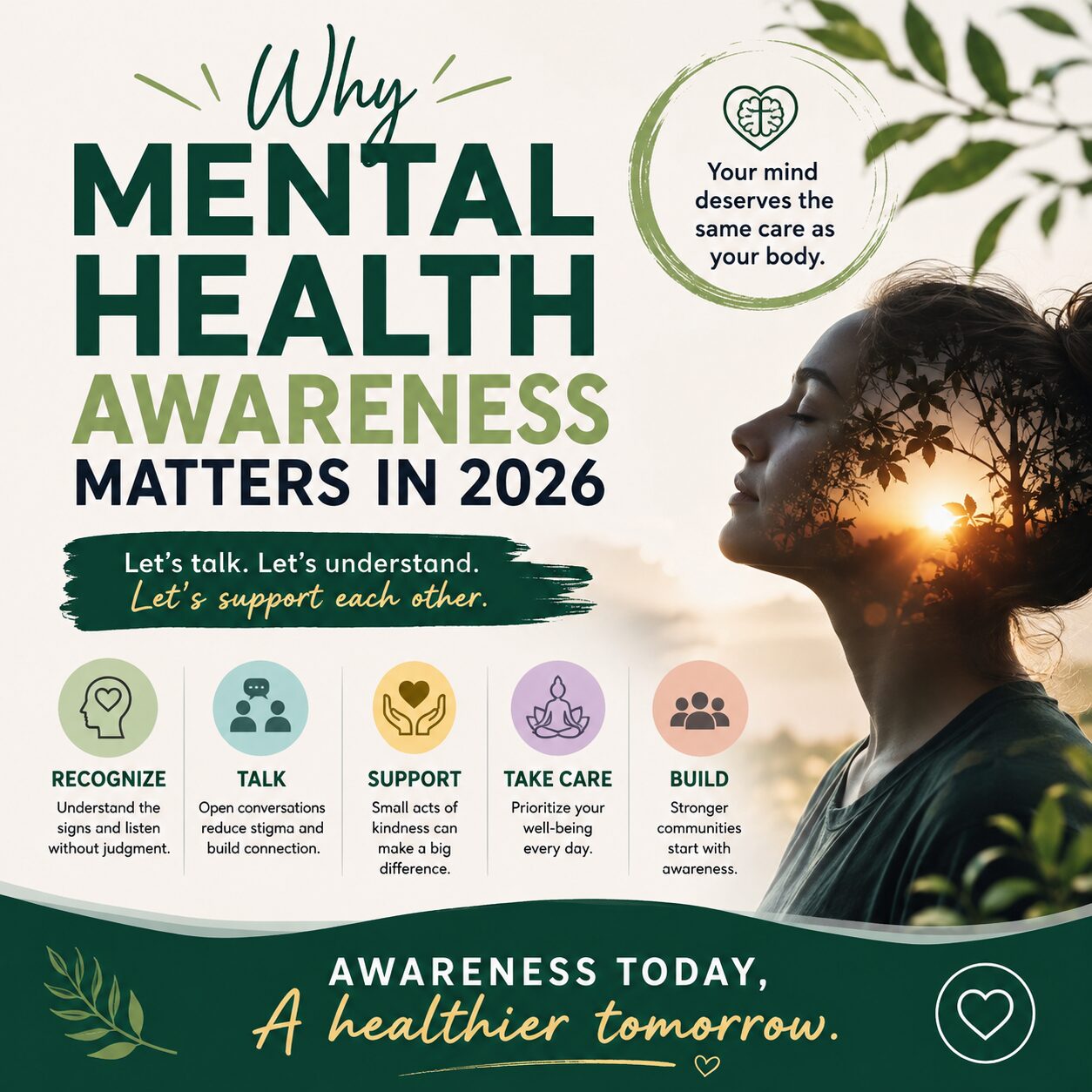
"You look fine."
Those three words can hide a painful truth.
Some of the strongest people you know are quietly carrying burdens you'll never see. They show up at work. They attend classes. They laugh at jokes. They reply to messages with a simple "I'm okay." But beneath the surface, they're battling stress, anxiety, loneliness, burnout, or emotional exhaustion.
The hardest struggles are often invisible.
For years, society taught us to pay close attention to our physical health. We know to treat a fever, rest a broken bone, or visit a doctor when something doesn't feel right. But when it comes to our minds, many people still suffer in silence because they're afraid of being judged, misunderstood, or seen as weak.
Here's the lesson we all need to remember:
**Mental health deserves the same care, compassion, and attention as physical health.**
Awareness isn't about having all the answers. It's about creating a world where people feel safe enough to ask for help before they reach a breaking point.
Here are a few simple ways we can all make a difference:
✅ **Listen without rushing to fix everything.** Sometimes the greatest gift you can offer is your presence and your willingness to listen.
✅ **Check in with people beyond "How are you?"** Ask questions that invite honest conversations. A genuine "How have you really been lately?" can open doors that small talk never will.
✅ **Protect your own well-being.** Prioritize sleep, take breaks from constant scrolling, spend time with people who lift you up, and make space for rest without feeling guilty.
✅ **Choose compassion over assumptions.** You never truly know what someone else is carrying. Kindness costs little, but it can change someone's day—or even their life.
Every supportive conversation helps chip away at the stigma surrounding mental health. Every act of empathy reminds someone that they don't have to face life's challenges alone.
Imagine the difference we could make if asking for help became as normal as visiting a doctor for a physical illness. That kind of change begins with ordinary people choosing to listen, understand, and care.
💚 **What's one habit that helps you protect your mental well-being during stressful seasons?** Share it in the comments—you never know who might need your encouragement today.
If this message resonates with you, consider sharing it with someone who may need a reminder that their mental health matters. And if you'd like to explore practical strategies for building emotional resilience and reducing stigma, read the full article on SenseDiary.
I couldn’t fit everything in this post 👀
The full breakdown (with examples + practical steps) is here: Learn More
Monday, August 3, 2026
Master Your Mind: The Blueprint for Relentless Self-Discipline
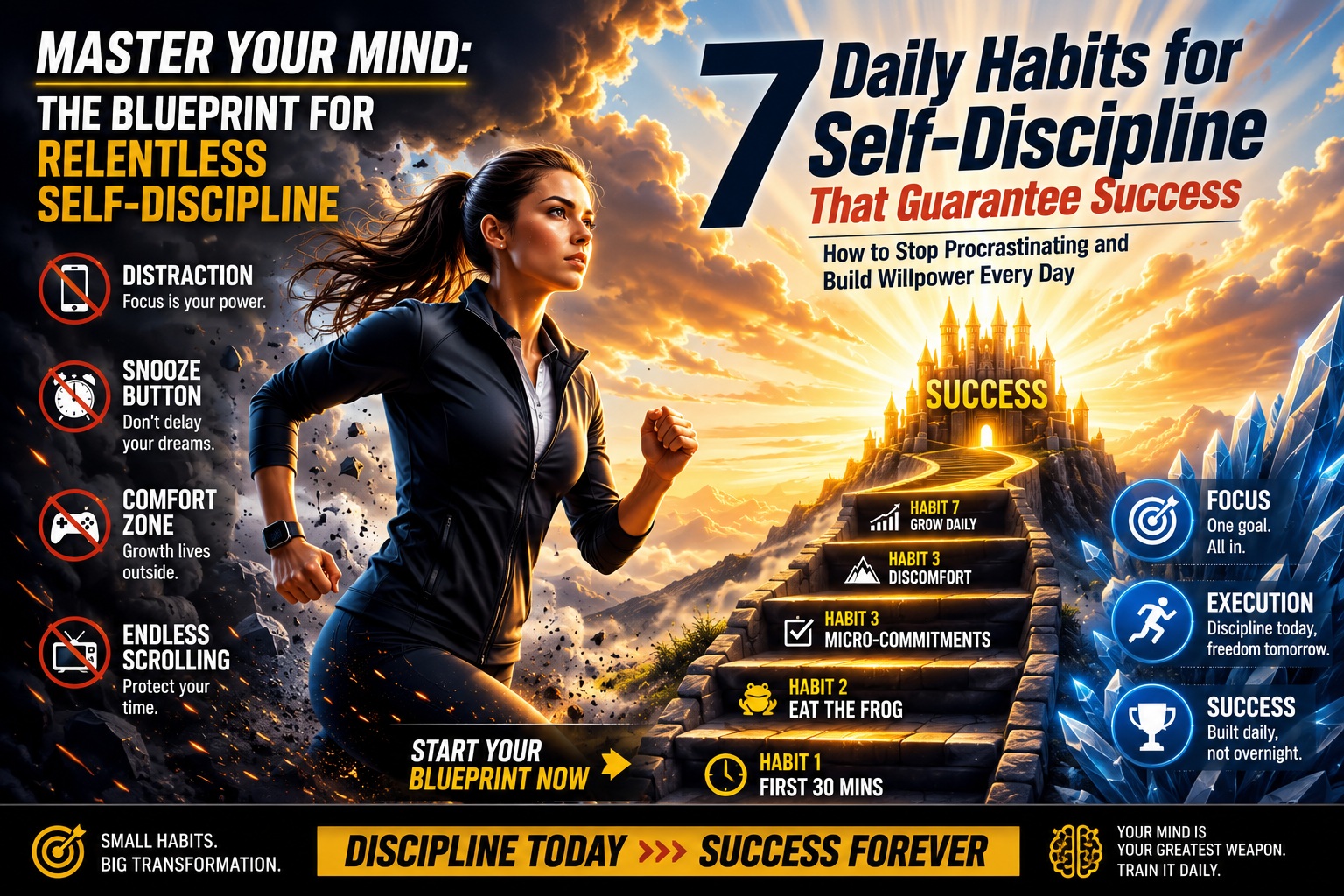
Discipline isn't about fighting constant temptation; it's about structuring your life so that temptation rarely has a chance to reach you. If you rely entirely on mental stamina to make good choices, you are starting the day at an immediate disadvantage.
Here are four friction-shifting changes you can make to your physical space today to make self-discipline completely automatic:
Bury Your Digital Distractions: If your smartphone sits face-up on your desk during deep-work hours, your focus is already compromised. Place it in another room, or lock it inside a drawer. Out of sight truly is out of mind.
Stage Your Winning Choices: Make the habits you want to build the path of least physical resistance. Want to write more? Leave your laptop open on your desk with the document ready. Want to exercise early? Lay your shoes and clothes right next to the bed.
Increase Friction for Bad Habits: Make your vices incredibly inconvenient. Unplug your television after every use. Delete addictive apps so you have to manually re-download them. Force your brain to pause and think.
Visual Cueing: Keep a physical habit tracker on your wall. The simple psychological urge to avoid breaking a visible streak acts as an incredibly powerful visual anchor for consistency.
Design a space where winning is easy and losing is difficult.
I couldn’t fit everything in this post 👀
The full breakdown (with examples + practical steps) is here: Learn More
Friday, July 10, 2026
The Wealth Multiplier: Mastering High-Value Soft Skills for Financial Independence
Your income is often limited by your communication, not your potential.
Many talented people remain underpaid—not because they lack knowledge, but because they struggle to communicate their value.
In today's economy, technical skills may help you qualify for opportunities, but soft skills determine how far you go. The ability to explain ideas clearly, build trust, solve problems, and influence people has become one of the greatest competitive advantages you can develop. As automation and AI continue to handle routine tasks, human-centered skills are becoming even more valuable in the workplace.
One lesson stands out above all:
**If people cannot see your value, they are unlikely to pay for your value.**
Here are a few practical ways to strengthen that skill today:
✅ **Learn to communicate with purpose.** Don't just share information—help people understand why it matters. Whether you're speaking in meetings, writing emails, or posting online, clarity creates influence.
✅ **Practice active listening.** Great communicators spend more time understanding than speaking. When people feel heard, they are more willing to trust, collaborate, and recommend you.
✅ **Present solutions, not just problems.** Employers, clients, and leaders value people who think critically and bring practical answers instead of simply identifying what's wrong.
✅ **Keep learning and adapting.** Industries change, technology evolves, and opportunities shift. The people who remain valuable are those who continue improving both their technical expertise and their people skills.
Success isn't always about working harder. Sometimes it's about becoming better at connecting with people, communicating ideas, and creating value wherever you go.
Invest in your soft skills every day. They can open doors that qualifications alone cannot.
If you'd like to explore the five high-value soft skills that can increase your earning potential and help you build long-term financial independence, the full article breaks each one down with practical examples and actionable tips.
📖 Read the full article here: *The Wealth Multiplier: Mastering High-Value Soft Skills for Financial Independence* on SenseDiary.
I couldn’t fit everything in this post 👀
The full breakdown (with examples + practical steps) is here: Learn More
Sunday, July 5, 2026
10-Minute Morning Affirmations for Daily Success
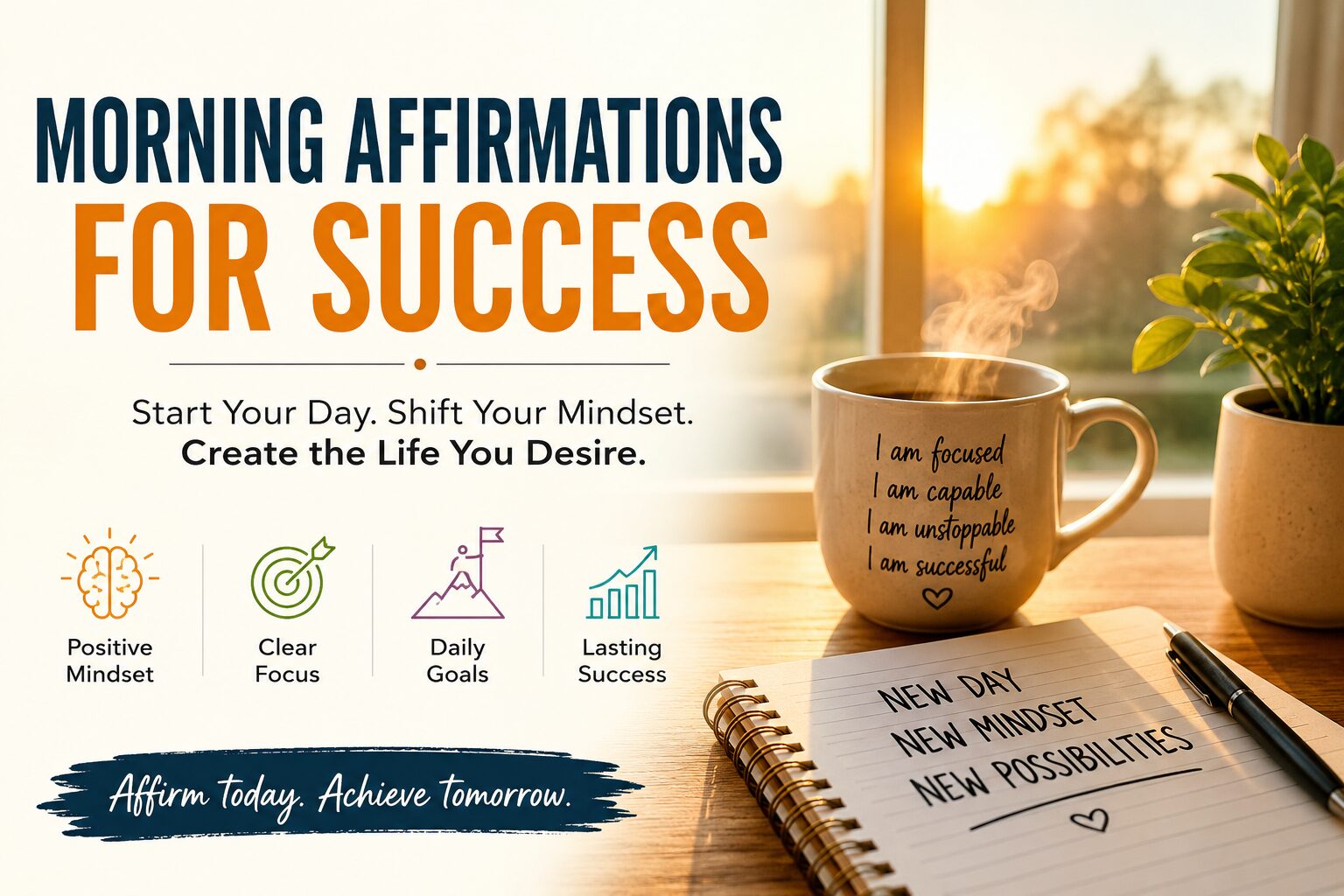
Your morning doesn't just start your day—it sets the direction for your life.
If the first thing you do every morning is check your phone, respond to emails, or worry about everything on your to-do list, you're training your mind to react instead of lead.
Success rarely begins with working harder. It begins with thinking differently.
Here are a few simple lessons that can completely change the way you approach your mornings:
✅ Protect the first few minutes of your day.
Before social media, messages, or news headlines compete for your attention, give your mind something positive to focus on. A calm and intentional start helps you make better decisions throughout the day.
✅ Speak to your future, not your fears.
Morning affirmations aren't about pretending problems don't exist. They're about reminding yourself of your strengths, your purpose, and the person you're becoming. What you repeatedly tell yourself often shapes the actions you take.
✅ Replace reaction with intention.
Don't let notifications decide your priorities. Start your day by choosing one clear intention. Whether it's serving your clients well, completing an important project, or simply staying positive, intentional actions create consistent results.
✅ Small daily habits create lasting success.
You don't need a perfect morning routine. Even spending five minutes reading encouraging words, practicing affirmations, or reflecting on your goals can gradually transform your mindset and build confidence over time.
The quality of your mornings often determines the quality of your days, and the quality of your days eventually shapes the quality of your life. Success isn't built in a single breakthrough—it's built through small, consistent choices repeated every morning.
If you're ready to learn the science behind morning affirmations, discover why they work, and explore powerful affirmations you can start using today, read the full article on SenseDiary. The few minutes you invest in your mindset each morning could become one of the highest-return investments you ever make.
I couldn’t fit everything in this post 👀
The full breakdown (with examples + practical steps) is here: Learn More
Wednesday, June 3, 2026
Stop Searching Everywhere: These 15 Virtual Assistant Platforms Deliver Better Opportunities

🚨 The biggest mistake aspiring Virtual Assistants make?
They spend weeks searching for jobs but never spend time searching for the right platforms.
If you've ever felt frustrated after applying for dozens of virtual assistant jobs without getting a response, you're not alone. The problem isn't always your skills. Sometimes it's simply where you're looking.
Here's a lesson that can save you months of wasted effort:
**The best virtual assistants don't apply everywhere. They focus on platforms that match their skills, experience, and career goals.**
Here are 4 practical ways to improve your chances of landing better opportunities:
✅ **1. Prioritize quality over quantity**
Submitting 100 applications on low-quality job boards is often less effective than sending 10 strong applications on reputable platforms where serious clients are actively hiring.
✅ **2. Build a specialized skill**
General virtual assistants are everywhere. VAs who can manage social media, customer support, email marketing, bookkeeping, or content management often attract higher-paying clients.
✅ **3. Create a professional online presence**
A simple portfolio, LinkedIn profile, or personal website can instantly increase your credibility. Clients want proof that you can deliver results.
✅ **4. Focus on long-term relationships**
The highest-earning virtual assistants are not constantly chasing new clients. They build trust, provide value, and turn one project into months or years of recurring income.
✅ **5. Be patient and consistent**
Many people quit after a few rejections. Successful VAs understand that persistence is often the difference between earning nothing and building a reliable online income stream.
The online job market is growing, but opportunities don't automatically go to the most talented people. They often go to those who position themselves in the right places and remain consistent.
If you're considering a virtual assistant career or looking for better remote work opportunities, investing time in finding the right platforms may be the smartest move you make this year.
I couldn’t fit everything in this post 👀
The full breakdown (with examples + practical steps) is here: Learn More
10 Best Virtual Assistant Tools for Automating Tasks and Improving Productivity
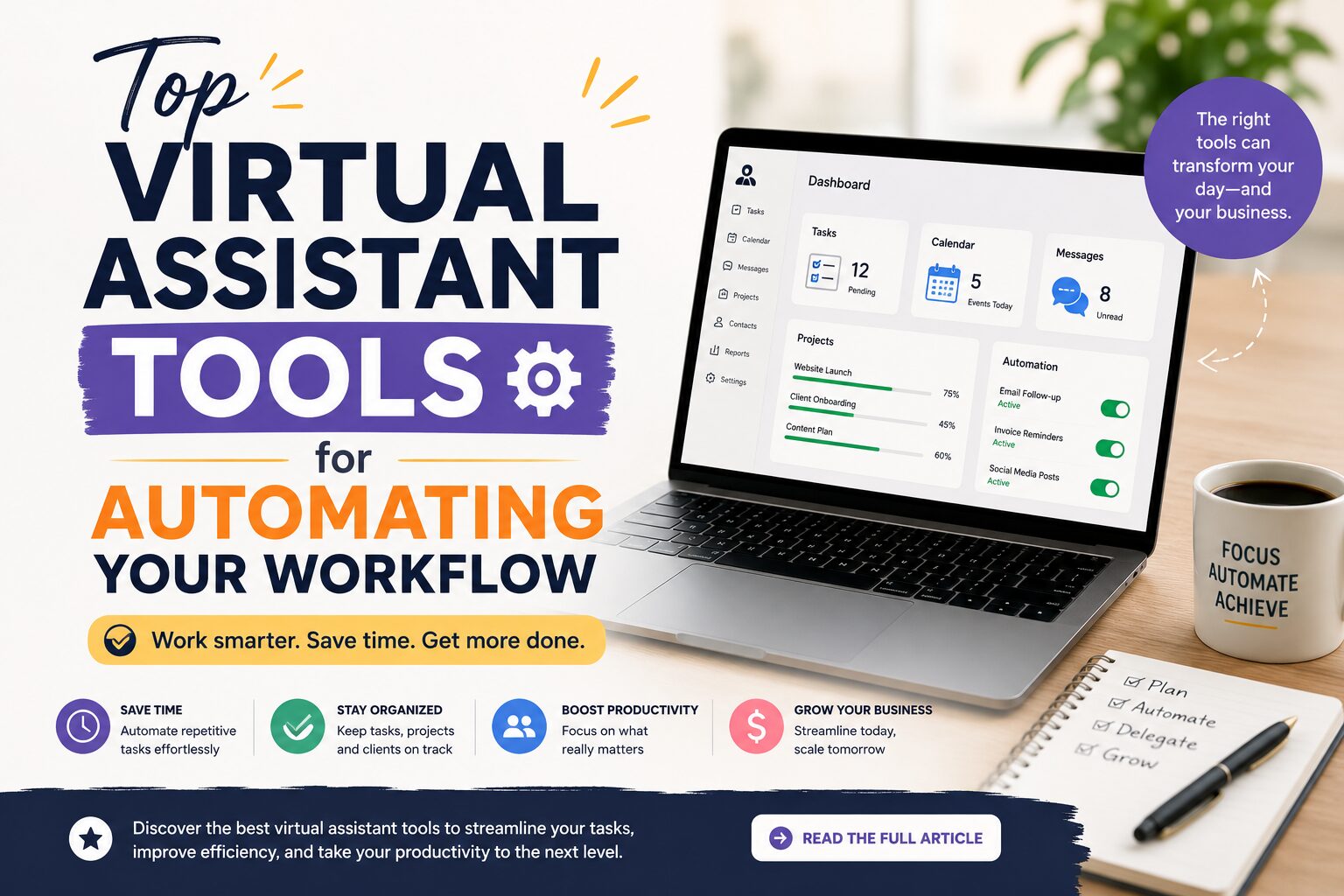
⚠️ Being busy is not the same as being productive.
One of the biggest mistakes virtual assistants, freelancers, and online entrepreneurs make is believing they need to work longer hours to get more done.
The truth?
The most productive professionals aren't necessarily working harder—they're automating repetitive tasks so they can focus on work that truly matters.
If you're constantly switching between emails, scheduling appointments, managing files, following up with clients, and updating spreadsheets, you're probably losing valuable hours every week without realizing it.
Here are a few lessons worth remembering:
✅ Audit Your Daily Tasks
Take a close look at your routine. Which tasks do you repeat every day or every week? These are often the first candidates for automation. Small repetitive tasks may seem harmless, but they can consume hours over a month.
✅ Let Technology Handle Repetition
Your time is valuable. Activities such as appointment scheduling, email sorting, task reminders, file organization, and social media scheduling can often be automated with the right tools. The goal is not to replace yourself—it's to free yourself.
✅ Create Systems, Not Stress
Successful virtual assistants rely on systems. Instead of remembering every task manually, they build workflows that ensure important activities happen consistently and accurately.
✅ Focus on High-Value Work
The more time you spend on strategy, communication, problem-solving, and client relationships, the more valuable you become. Automation allows you to spend less time managing tasks and more time creating results.
✅ Productivity Is About Leverage
Working 12 hours a day isn't always the answer. Often, the smarter approach is to find ways to achieve the same result with less effort and fewer distractions.
The strongest lesson?
💡 Every task you automate today becomes time you can reinvest tomorrow.
Whether you're a virtual assistant, freelancer, side hustler, or business owner, learning how to leverage automation can help you work more efficiently without feeling overwhelmed.
I couldn’t fit everything in this post 👀
The full breakdown (with examples + practical steps) is here: Learn More
Tuesday, June 2, 2026
Skip the Scams: 10+ Genuine Work-From-Home Ideas I’ve Personally Vetted to Earn $1,000+ a Month

💡 Most people don't have an income problem—they have an opportunity problem.
The mistake many aspiring side hustlers make is believing they need a large amount of money, special qualifications, or years of experience before they can start earning from home.
The reality?
Many successful work-from-home earners started with skills and resources they already had.
If you're looking for a practical lesson today, remember this:
👉 Don't focus on finding the "perfect" side hustle. Focus on starting the right one consistently.
Here are a few principles that can help:
✅ Start with what you already know.
You don't need to become an expert overnight. Skills such as writing, teaching, graphic design, customer support, social media management, or even organizing information can become income-generating opportunities.
✅ Solve real problems.
The people who earn consistently online are usually solving a problem for someone else. The bigger the problem you solve, the greater the value you can create.
✅ Focus on one opportunity first.
Trying five different side hustles at the same time often leads to frustration. Pick one idea, learn it well, and give it enough time to produce results before moving on.
✅ Build skills before chasing money.
Income follows value. The more useful your skills become, the easier it is to attract opportunities, clients, and long-term earnings.
✅ Think beyond quick cash.
A good side hustle can provide extra income today. A great side hustle can become a business, a career, or a source of financial freedom tomorrow.
The biggest difference between those who succeed and those who don't is rarely talent—it's consistent action.
Small steps taken every day often outperform big plans that never leave the notebook.
I couldn’t fit everything in this post 👀
The full breakdown (with examples + practical steps) is here: Learn More
Monday, June 1, 2026
How to Improve Mental Health Naturally and Reduce Stress: 10 Daily Habits That Make a Real Difference
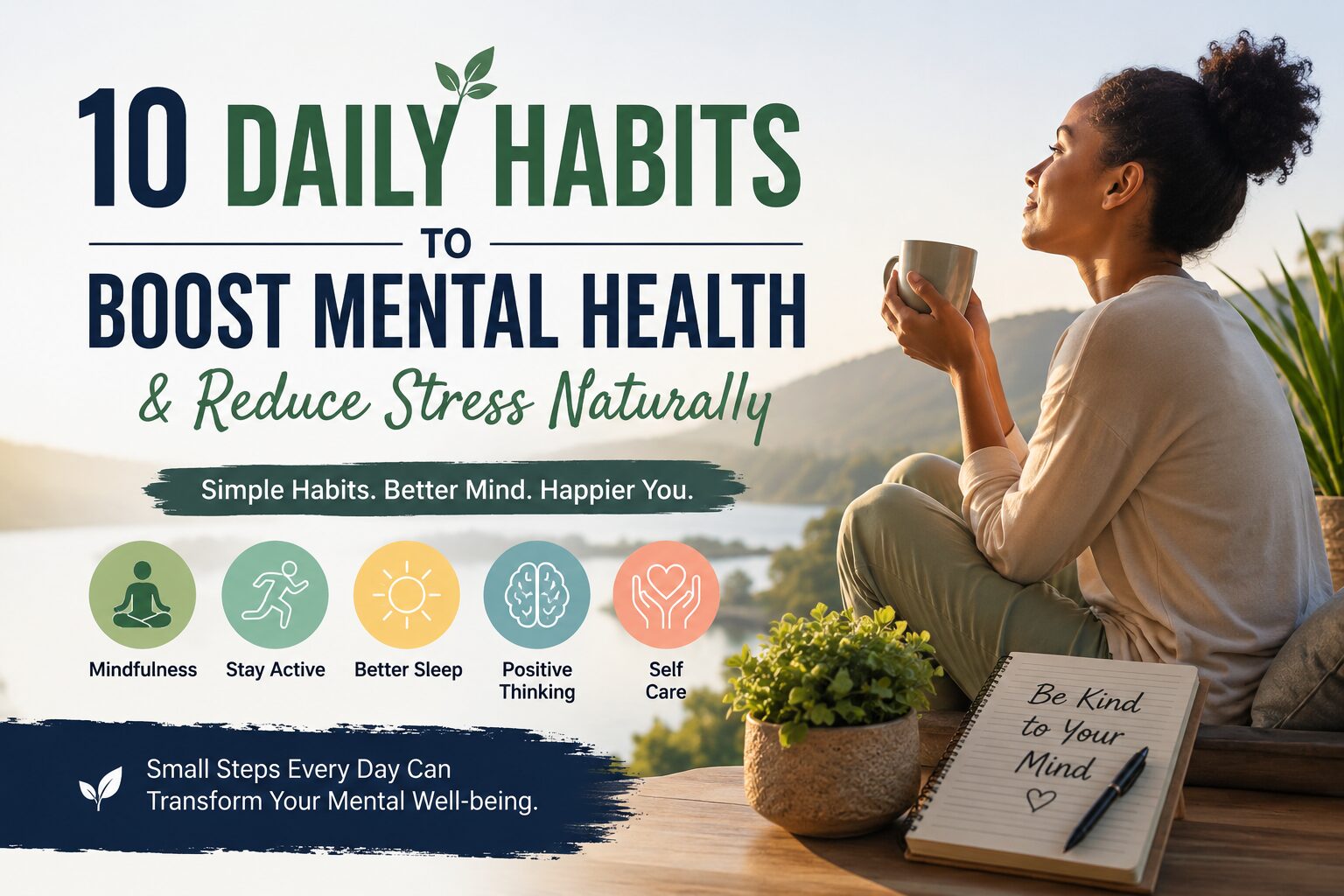
Your mental health is not built by what you do once in a while. It's built by what you do every day.
Many people wait until they feel overwhelmed, burned out, anxious, or emotionally exhausted before they start paying attention to their mental well-being. But mental health works much like physical health. Small daily actions compound over time—either helping you grow stronger or leaving you vulnerable to stress.
One of the biggest mistakes people make is looking for a quick fix when what they really need is a better daily routine.
Here are a few simple habits that can make a noticeable difference:
✅ Start your day without immediately reaching for your phone.
Give your mind a few minutes of peace before exposing it to notifications, news, and social media.
✅ Move your body every day.
You don't need an intense workout. A short walk, stretching session, or light exercise can help reduce stress and improve your mood.
✅ Practice gratitude.
Instead of focusing on what's going wrong, take a moment to identify three things that are going right. This simple habit can gradually shift your mindset toward positivity.
✅ Protect your sleep.
Late-night scrolling often steals tomorrow's energy. Quality sleep is one of the most powerful tools for emotional resilience and stress management.
✅ Create moments of quiet.
Whether through prayer, reflection, journaling, or simply sitting in silence, giving your mind space to reset can help you think more clearly and respond to challenges more calmly.
The lesson is simple: you don't need a completely different life to improve your mental health. You need better daily habits.
Small actions repeated consistently often create the biggest transformation.
If you've been feeling stressed, mentally drained, or emotionally stretched, consider which of these habits you can start practicing today.
I couldn’t fit everything in this post 👀
The full breakdown (with examples + practical steps) is here: Learn More
Friday, May 29, 2026
How to Start a Digital Business With No Money (From Zero to First $100 Online)
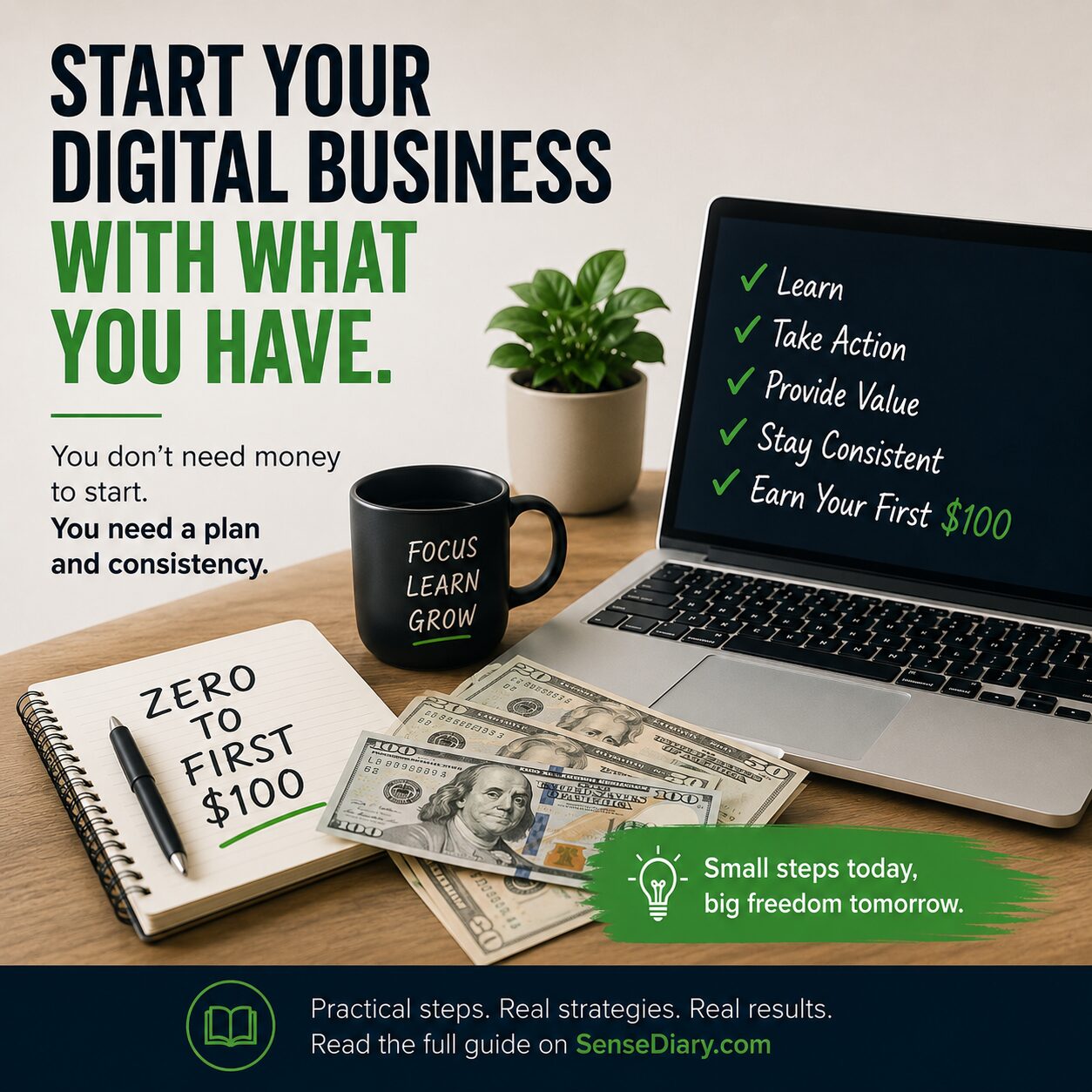
💡 The biggest lie stopping people from making money online isn't a lack of opportunity.
It's the belief that you need money before you can start.
Think about it. How many times have you said:
❌ "I need a better laptop first."
❌ "I need money for advertising."
❌ "I need to buy a course."
❌ "I need the perfect business idea."
Meanwhile, someone else starts with what they have and learns along the way.
One of the strongest lessons from successful digital entrepreneurs is this:
👉 Resourcefulness beats resources.
If you're trying to build an online income stream, here are a few principles worth remembering:
✅ 1. Start with a skill, not a business.
Many people focus on creating a company before learning how to create value. Whether it's writing, design, teaching, research, or marketing, skills create opportunities. Businesses grow from those opportunities.
✅ 2. Solve a problem before looking for profit.
People don't pay for ideas. They pay for solutions. The more useful you become, the easier it becomes to earn your first income online.
✅ 3. Use free tools until growth demands an upgrade.
Some of the most successful creators started with free websites, free software, and free social media platforms. Don't let the absence of premium tools delay your progress.
✅ 4. Focus on your first $100, not your first $100,000.
Big goals inspire us, but small wins build confidence. Your first online income proves that the process works. From there, growth becomes much easier.
✅ 5. Consistency is a competitive advantage.
Most people quit after a few weeks because results are slow. Those who stay committed long enough often discover that success comes from persistence, not perfection.
The internet has never offered more opportunities than it does today. The question isn't whether you can start. The question is whether you'll take the first step with the resources already in your hands.
📖 If you'd like a practical roadmap for going from zero to your first $100 online, the full article breaks down the mindset shifts, business models, and action steps that can help you get started.
Read it, apply one lesson, and take action today.
I couldn’t fit everything in this post 👀
The full breakdown (with examples + practical steps) is here: Learn More
Friday, May 1, 2026
The Best High-Income Skills to Learn in 2026 (With Free Resources)

Let’s be honest: the "digital age" isn't coming anymore—it’s lived-in. In 2026, the question isn't whether a business should be online, but whether that online presence is actually working while the owner sleeps.
This shift has created a massive demand for a specific high-income skill: AI-Integrated Web Architecture. If you’ve been looking for a skill that offers both high pay and "indestructible" career security, this is it.
Here is why mastering website strategy is a top-tier skill in 2026, and how you can learn it to build assets that convert.
1. Why Web Strategy is a "Power Skill" in 2026
In 2026, consumer behavior has shifted from "searching for products" to "seeking experiences." Companies are no longer looking for someone to just "make a page"; they are looking for architects who understand these four pillars:
Ownership vs. Renting: Social media algorithms change overnight. A high-income specialist knows how to migrate an audience from "rented" social spaces to "owned" digital real estate.
The Trust Economy: Customers in 2026 are savvy. They look for legitimacy. A professional, high-performance site is the "digital headquarters" that signals a brand is established and reliable.
Global Systems: High-income earners don't just build sites; they build systems. Whether it’s 2 AM in Abidjan or 2 PM in New York, a well-built site is teaching, selling, and collecting leads automatically.
Data Literacy: Understanding how visitors interact with a brand is the "new gold." Mastering the analytics behind a website allows you to command premium rates as a growth consultant.
2. What "High-Income" Web Mastery Looks Like Now
Forget the static, "brochure-style" sites of the past. Today’s high-value skill set involves Intelligent Design:
AI-Powered Hyper-Personalization: Learning to implement sites that "learn" from the visitor. If a repeat customer visits, the site adjusts the layout or highlights products based on their history. It’s no longer a one-size-fits-all message; it’s a one-to-one conversation.
Meaningful Minimalism: Mastering the move toward clean layouts, bold typography, and interactive 3D elements that guide a user through a story rather than a list of features.
3. How to Master This Skill (Your 2026 Learning Path)
Building a website used to take months. Now, the high-income skill lies in AI Orchestration—using tools to build faster and smarter.
Step 1: Define the "North Star": Learn to identify the goal. Is the client booking tutoring sessions? Selling physical goods? Growing a blog? Knowing the objective determines the architecture.
Step 2: Master the AI-Powered Stack:
Wix ADI & Hostinger AI: Perfect for rapid deployment for small businesses.
WordPress with AI Copilots: The gold standard for total control. Mastery of WordPress—now featuring voice-command management and predictive security—is a highly lucrative niche.
Step 3: The "Human-in-the-Loop" Edge: AI can generate the skeleton, but you provide the "soul." Your value lies in refining the tone, ensuring brand voice, and integrating secure payment gateways like Payoneer.
Step 4: SEO and Accessibility: High-income specialists ensure sites are "thumb-friendly" for mobile and meet 2026 accessibility standards. A site everyone can use is a site everyone can buy from.
Free Resources to Start Learning Today
Google IT Support Professional Certificate (Coursera): Great for the technical foundations of how the internet and security work.
HubSpot Academy: Excellent for learning the "Inbound" methodology—how to make a site actually convert visitors into customers.
WordPress.org Documentation & YouTube (AI-specific): Search for "WordPress AI Copilot tutorials" to see how the landscape has shifted to natural language site-building.
Final Thoughts: The Cost of Waiting
The "digital divide" is widening. While many are still debating which skills to learn, those mastering web architecture are building scalable assets that grow in value every day. Learning to build a digital home isn't just a tech project—it’s a wealth strategy.
Thursday, April 23, 2026
Why Every Business Needs a Website (and How to Start One in 2026)

In the business world of 2026, the digital landscape has shifted from being a "luxury extension" of a brand to being the very foundation upon which it stands. Whether you are a local artisan, a specialized science tutor, or an international coach, the question is no longer, "Do I need a website?" but rather, "How quickly can I make my website the heart of my operations?"
If you’ve been relying solely on social media platforms or word-of-mouth, you’re essentially building a house on rented land. This post explores why a dedicated digital home is non-negotiable this year and provides a clear, actionable roadmap to launching your own.
The "Why"—More Than Just a Digital Business Card
1. Ownership and Stability in a Volatile Social Media Era
Social media algorithms are fickle. We’ve seen platforms rise and fall, and reach can be throttled overnight. A website is the only piece of digital real estate that you own. It’s your sanctuary where the rules don’t change because of a corporate boardroom decision. When you own your domain, you own your audience's journey.
2. The New Standard of Credibility
In 2026, consumer skepticism is at an all-time high. Before a client books a coaching session or purchases a digital product, they "vet" the provider. A professional website acts as a seal of legitimacy. It says, "I am invested in my craft, and I am here for the long haul."
3. AI-Driven Discoverability (SGE and Beyond)
Search has evolved. With the full integration of Search Generative Experiences (SGE), AI models now crawl the web to provide direct answers to users. If your business information, expertise, and testimonials aren't hosted on a structured website, you are invisible to the AI assistants that people use to make buying decisions.
4. 24/7 Automated Operations
A website doesn't sleep. While you are resting or focusing on family, your website is:
Collecting leads through lead magnets.
Answering FAQs.
Processing payments for ebooks or courses.
Scheduling discovery calls.
The Essential Components of a 2026 Website
Before you buy a domain, you need to understand the "bones" of a modern site. It isn't just about pretty colors; it’s about functionality and user experience (UX).
The "Must-Haves":
Hyper-Personalization: Use of data to show returning visitors content relevant to their last interaction.
Voice Search Optimization: Content written in a conversational tone to match how people speak to AI devices.
Ultra-Fast Loading Speeds: In 2026, if a page takes more than 1.5 seconds to load, you’ve lost the lead.
Mobile-First Design: It’s not just "responsive" anymore; it must be designed for the thumb first, the mouse second.
How to Start Your Website (The 2026 Roadmap)
Starting a website today is easier than ever, but because there are so many tools, it’s easy to get "analysis paralysis." Follow these five steps to get live in record time.
Step 1: Define Your Core Objective
Are you selling physical goods, offering high-ticket coaching, or building an ad-revenue blog?
For Coaches/Educators: Focus on booking systems and video integration.
For Digital Marketers: Focus on landing pages and email marketing integration.
Step 2: Choose Your Engine (CMS)
While there are many "drag-and-drop" builders, WordPress remains the king for those who want long-term SEO control and scalability. However, for 2026, "headless" CMS options are gaining traction for those who want extreme speed.
Recommendation: Stick with WordPress.org (self-hosted) for maximum flexibility and ownership.
Step 3: Domain and Hosting
Your domain should be your brand name (e.g., YourBrand.com). For hosting, look for providers that offer managed AI-optimized hosting. These servers are specifically tuned to handle the heavier scripts used by modern AI chatbots and interactive elements.
Step 4: The "Minimal Viable Site" Structure
Don't get bogged down trying to build 50 pages. Start with the "Power Five":
Home: A clear value proposition (What do you do for the user?).
About: Your story, your "why," and your credentials.
Services/Products: High-quality imagery and clear pricing/inquiry buttons.
The Blog/Resources: Where you demonstrate authority through content.
Contact: Multiple ways to reach you, including a simple form.
Step 5: Content and SEO Strategy
SEO in 2026 is about EEAT (Experience, Expertise, Authoritativeness, and Trustworthiness). Don't just rewrite what's already out there. Share your unique case studies, your personal wins, and your specific methodology.
Common Pitfalls to Avoid
Ignoring Accessibility: Ensure your site is usable for everyone, including those with visual or hearing impairments. This is now a major ranking factor.
Over-complicating Design: Minimalist, clean designs convert better than flashy, distracting animations.
Forgetting the Lead Magnet: Never let a visitor leave without offering them something of value (a PDF, a checklist, a free mini-lesson) in exchange for their email address.
Final Thoughts: Your Journey Begins Here
A website is more than a technical requirement; it is an invitation. It is a way to tell the world that you are open for business, that you value your clients' time, and that you have something worth sharing.
Building a digital presence is a marathon, not a sprint. The most important thing you can do today is take that first step—secure your name and plant your flag in the digital soil.
Want a deeper dive? > This is just the tip of the iceberg. For a technical, step-by-step breakdown—including the specific plugins I recommend and a deep dive into 2026 SEO tactics—check out our comprehensive guide over at
. SenseDiary
Samuel Omotosho Educator, Marketer, and Coach
Friday, April 3, 2026
How to Build a Balanced Meal Without Complicating Your Diet
 |
| Photo by Diet Guide |
Let’s be honest: the world of nutrition has become a bit of a maze. If you spend five minutes scrolling through social media, you’ll find one person swearing that fruit is "too sugary," another claiming you should only eat meat, and a third insisting that if your kale isn’t massaged by a Himalayan monk, you’re doing it wrong.
It’s exhausting, isn't it?
For many of us, the goal isn't to become a professional bodybuilder or a rigid calorie-counter. We just want to feel better. We want to wake up with energy, keep our brains sharp for work, and ensure we’re nourishing our bodies for the long haul—all without needing a PhD in biochemistry just to make lunch.
The good news? Healthy eating doesn’t have to be complicated. In fact, the most sustainable diets aren't "diets" at all; they are simply a series of smart, repeatable habits. Today, we’re going to strip away the jargon and look at how to build a balanced meal using simple, practical tools that work for real life.
1. The "Plate Method": Your Secret Weapon
Forget the kitchen scale and the complex tracking apps for a moment. If you want a perfectly balanced meal every time, you only need to visualize your plate. This is known as the Plate Method, and it’s the gold standard for effortless portion control and nutrition.
Imagine drawing a line down the middle of your plate, and then splitting one of those halves in two. Here is your blueprint:
50% Non-Starchy Vegetables
Half of your plate should be a vibrant "garden." Vegetables like spinach, broccoli, peppers, carrots, cabbage, and green beans are high in fiber and micronutrients but relatively low in calories. They add volume to your meal, which keeps you feeling full without feeling heavy.
25% High-Quality Protein
Protein is the building block of your body. It’s what keeps your muscles strong and, perhaps more importantly, what keeps your hunger hormones in check. This quarter of your plate should include things like grilled chicken, fish, eggs, beans, lentils, or tofu.
25% Complex Carbohydrates
Carbs are not the enemy; they are your body’s preferred fuel source. The trick is choosing "slow-release" carbs that don't cause energy crashes. Think of whole grains like brown rice, quinoa, or oats, as well as starchy vegetables like sweet potatoes or yams.
The "Thumb" of Healthy Fats
Fats are essential for brain health and vitamin absorption. Since they are calorie-dense, you don’t need a huge portion. Aim for a "thumb-sized" serving of healthy fats—like a slice of avocado, a drizzle of olive oil, or a small handful of nuts.
2. Making It Practical: Local Food Combinations
One of the biggest mistakes people make when "starting a diet" is trying to eat foods they don't actually like or can't easily find. You don't need to eat asparagus and quinoa if those aren't staples in your kitchen. You can build a balanced meal using the foods already available in your local market.
Let’s look at how the Plate Method translates to common, everyday meals:
The Rice-Based Meal: Instead of a giant mountain of white rice with a tiny piece of meat, flip the script. Serve a modest portion of rice (about the size of your fist), a generous piece of grilled fish or chicken, and fill the rest of the plate with a sautéed vegetable mix or a fresh side salad.
The Tuber Approach: If you enjoy yams, cassava, or potatoes, treat them as your 25% carb portion. Pair them with a protein-rich stew (heavy on the lean meat or beans) and a large side of steamed greens or okra.
The One-Pot Wonder: If you’re making a soup or a stir-fry, check your ratios. Is it mostly noodles or rice? Try adding double the amount of vegetables and extra lean protein to bring it into balance.
By working with your local palate, you make healthy eating feel like a lifestyle rather than a chore. It’s about substitution and proportion, not elimination.
3. Mastering Portion Control Without the Math
Even "healthy" food can lead to weight gain or lethargy if eaten in excess. However, you don't need to weigh every gram of food to get it right. Your hands are actually the most convenient (and portable) measuring tools you own.
Protein: Your palm (excluding fingers) is roughly one serving.
Vegetables: A fist is one serving (and remember, you want at least two of these!).
Carbohydrates: A cupped hand is one serving of grains or starches.
Fats: Your entire thumb is one serving of fats like oil or butter.
Using your hands ensures that your portions are relative to your body size. A larger person has larger hands and generally requires more fuel; a smaller person has smaller hands and requires less. It’s a built-in, personalized system!
4. The "Why" Behind the Balance
You might be wondering, "Why do I have to bother with all these sections? Can't I just eat a salad?" The reason balance matters is Blood Sugar Stability.
When you eat a meal that is 90% carbohydrates (like a big bowl of pasta or a plate of plain white rice), your blood sugar spikes rapidly. Your body releases insulin to manage that sugar, which often leads to a "crash" an hour or two later. That crash makes you feel tired, irritable, and—you guessed it—hungry for more sugar.
By adding protein, fiber (from veggies), and healthy fats, you slow down the digestion of those carbohydrates. This results in a slow, steady release of energy. You’ll find you can focus longer at work, you won't get "hangry" in the mid-afternoon, and your cravings for snacks will naturally diminish.
5. Beginner-Friendly Tips for Success
If you’re ready to start building better plates today, here are a few "pro tips" to keep things simple:
1. Drink Water First
Oftentimes, our brains confuse thirst with hunger. Drink a glass of water about 15 minutes before your meal. It aids digestion and helps you tune into your body’s actual hunger signals.
2. Don’t Drink Your Calories
It’s easy to undo a balanced meal by washing it down with a soda or a heavily sweetened juice. Stick to water, herbal tea, or black coffee. If you want flavor, try infusing your water with slices of lemon or cucumber.
3. The 80/20 Rule
Perfection is the enemy of progress. If 80% of your meals follow the Plate Method, you can afford to be flexible with the other 20%. Enjoying a treat or a traditional feast with family is part of a healthy, balanced life.
4. Shop the Perimeter
When you go to the grocery store or the market, try to spend most of your time where the "whole" foods live—the produce section, the butchery, and the dairy. The middle aisles are usually where the highly processed, "complicated" foods hide.
Final Thoughts
At the end of the day, food is meant to be enjoyed. It’s fuel for your dreams, your work, and your time with family. When you simplify your approach to nutrition using the Plate Method, you free up "brain space" to focus on the things that truly matter.
Start with your next meal. Don't worry about being perfect; just look at your plate and ask: "Where are my greens? Where is my protein? Is my carb portion about the size of my fist?" If you can answer those questions, you’re already ahead of the curve. You’re not just eating; you’re building a foundation for a healthier, more vibrant version of yourself.
You’ve got this!
Tuesday, March 31, 2026
🌿 Why You Feel Unmotivated (And How to Reset Your Mind)

Have you ever sat down, knowing exactly what you should do—but you just don’t feel like doing anything?
You’re not lazy.
You’re not broken.
You’re likely just mentally overwhelmed, drained, or disconnected from clarity.
In today’s fast-paced world, feeling unmotivated is more common than ever. The good news? You can reset your mind and regain your drive—without pressure or burnout.
Let’s break it down.
🔍 Why You Feel Unmotivated
1. Mental Fatigue (Your Brain Is Tired)
You may not be physically exhausted, but your mind is overloaded.
Constant thinking, scrolling, worrying, and multitasking drain your mental energy. When your brain is tired, motivation naturally drops.
💡 Think of it this way:
You can’t expect a low battery to power a full day.
2. Lack of Clarity
Sometimes, the problem isn’t laziness—it’s confusion.
When your goals are unclear or too broad, your brain resists action because it doesn’t know where to start.
👉 “I want to be successful” is vague.
👉 “I will write 1 blog post today” is clear and actionable.
3. Overstimulation (Too Much Input, Not Enough Action)
Social media, notifications, videos, and endless content create dopamine overload.
This makes real-life tasks feel boring and harder to start.
📱 The more you consume, the less you create.
4. Emotional Weight
Stress, fear, self-doubt, or comparison can silently kill motivation.
When your mind is heavy, even simple tasks feel overwhelming.
🔄 How to Reset Your Mind (Simple & Practical)
You don’t need a drastic life change. You need a mental reset.
✅ 1. Start With a “Reset Pause”
Take 10–15 minutes to disconnect.
- Sit quietly
- Take deep breaths
- Step outside if possible
This helps your brain calm down and regain focus.
✅ 2. Reduce the Noise
Limit what drains your attention.
- Turn off unnecessary notifications
- Take breaks from social media
- Avoid information overload
💡 Clarity grows in quiet environments.
✅ 3. Do One Small Thing
Don’t wait for motivation—create it through action.
Start with something simple:
- Write one paragraph
- Clean one corner
- Read one page
Small wins rebuild momentum.
✅ 4. Create a Simple Plan for the Day
Instead of overwhelming yourself with long to-do lists:
👉 Choose 3 priority tasks only
This makes your day feel achievable and focused.
✅ 5. Move Your Body
Physical movement boosts mental energy.
- Take a short walk
- Stretch
- Do light exercise
Your mind often follows your body.
✅ 6. Reconnect With Your “Why”
Ask yourself:
👉 Why does this matter to me?
When your purpose is clear, motivation becomes easier to sustain.
✅ 7. Speak Positively to Yourself
Your inner voice matters.
Replace:
- “I’m lazy” → “I’m resetting and getting back on track”
- “I can’t do this” → “I’ll take it one step at a time”
💡 A Simple Truth to Remember
Motivation is not something you wait for.
It’s something you build through small, consistent actions.
🌱 Final Thoughts
Feeling unmotivated doesn’t mean you’ve failed—it simply means your mind needs rest, clarity, or direction.
Start small. Reduce the noise. Take one step.
That’s how momentum begins.
✨ Action Step
Today, do just one thing you’ve been avoiding—no matter how small.
Friday, March 27, 2026
10 Deep Stoic Truths Every Man Must Learn Before It’s Too Late

As we navigate the complexities of modern life, many men find themselves drifting—reacting to every crisis, chasing external validation, and feeling a persistent sense of being "behind." The weight of expectations can be crushing, but the ancient philosophy of Stoicism offers a timeless blueprint for reclaiming your power and building an unshakeable foundation.
The Truth Most Men Learn Too Late
The most profound lesson from the Stoic tradition is the Dichotomy of Control. It is the realization that your frustration, anxiety, and exhaustion usually stem from trying to control things that are fundamentally outside your reach. You cannot control the economy, the opinions of your peers, or the outcomes of your efforts. You can only control your character, your intentions, and your responses. When you stop outsourcing your happiness to external events, you become truly free.
Here are 5 practical ways to integrate these truths into your daily life:
Audit Your Mental Energy: Throughout the day, ask yourself: "Is this essential?" Most of what we worry about—office politics, social media comments, or past mistakes—is "noise" that drains the battery you need for "signal" (your actual work and family).
Master Your Morning: Don’t start your day by reacting to the world. Before you check your phone or emails, take ten minutes to set your intention. Own the first hour of your day so you aren't spending the rest of it playing catch-up to someone else's agenda.
Practice Voluntary Hardship: Strength isn't built in comfort. Occasionally choose the harder path—a cold shower, an intense workout, or skipping a luxury. By proving to yourself that you don't need constant comfort to be okay, you become resilient to life's inevitable setbacks.
Value Time Over Possessions: You can always make more money, but you can never claw back a wasted afternoon. Treat your time as your most valuable asset. Stop saying "yes" to things that don't align with your virtues.
Be Strict with Yourself, Tolerant of Others: We often do the opposite—we excuse our own flaws while judging everyone else. Flip the script. Hold yourself to the highest standard of discipline, but offer others the grace of understanding that they are fighting their own battles.
Stoicism isn’t about being emotionless; it’s about being "emotionally bulletproof." It is the art of remaining calm in the center of the storm. If you feel like you’ve been drifting, it’s not too late to grab the wheel.
I couldn’t fit everything in this post 👀
The full breakdown (with examples + practical steps) is here: Learn More
Thursday, March 26, 2026
🌿 The Science of Happiness: Simple Practices That Actually Work

Everyone Wants Happiness… But Few Understand It
Everyone is chasing happiness.
You see it everywhere:
- On social media
- In success stories
- In lifestyle goals
People believe:
👉 “When I achieve more, I’ll be happy.”
👉 “When life becomes easier, I’ll feel fulfilled.”
But here’s the truth:
👉 Happiness is not something you find—it’s something you build.
And more importantly…
👉 It’s not as complicated as it seems.
Modern science and psychology have shown that happiness is less about circumstances…
And more about daily habits and internal patterns.
In this post, you’ll discover:
- What happiness really is (beyond feelings)
- Why many people struggle to feel it
- Simple, science-backed practices that actually work
🧠 What Is Happiness (Really)?
Most people think happiness is:
- Excitement
- Pleasure
- Good moments
But that’s only part of the picture.
True happiness is:
👉 A state of inner well-being, contentment, and emotional balance.
It includes:
- Peace of mind
- Meaningful living
- Emotional stability
⚠️ The Problem with Chasing “Temporary Happiness”
Things like:
- Money
- Success
- Social validation
Can bring joy—but often only temporarily.
This is called hedonic adaptation (your brain quickly gets used to improvements).
👉 So you keep chasing more… but never feel satisfied.
🔍 Why Many People Feel Unhappy
Even when life seems “okay,” many people feel:
- Restless
- Unfulfilled
- Emotionally drained
Here’s why:
1. Living on Autopilot
You wake up, go through your day, repeat.
No reflection.
No intention.
👉 This disconnect reduces your sense of fulfillment.
2. Constant Comparison
Social media creates unrealistic expectations.
You compare your life to:
👉 Other people’s highlights.
3. Lack of Meaning
When your actions don’t align with purpose:
👉 Life feels empty—even if things are going well.
4. Mental Overload
Too much:
- Information
- Stress
- Distraction
👉 Leaves no space for peace.
🧪 The Science Behind Happiness
Research in Positive Psychology shows that happiness is influenced by:
- 50% genetics
- 10% life circumstances
- 40% daily actions and mindset
👉 That 40% is where your power lies.
🌿 7 Simple Practices That Actually Work
These are not theories—they are proven, practical habits.
🙏 1. Practice Gratitude Daily
Gratitude shifts your focus from:
👉 What’s missing → To what’s present
Studies show it:
- Improves mood
- Reduces stress
- Increases life satisfaction
✔️ How to Practice:
Every day, write down:
- 3 things you’re grateful for
They don’t have to be big.
🧘 2. Be Present in the Moment
Most people live:
- In the past (regret)
- In the future (worry)
👉 Rarely in the present.
✔️ How to Practice:
- Focus on your current activity
- Pay attention to your surroundings
- Breathe intentionally
🤝 3. Build Meaningful Relationships
Human connection is one of the strongest predictors of happiness.
✔️ What to Do:
- Spend time with people who uplift you
- Have real conversations
- Be present when interacting
🎯 4. Live with Purpose
Happiness increases when your life feels meaningful.
✔️ How to Start:
Ask yourself:
👉 “What truly matters to me?”
Then align your actions with that.
🏃 5. Move Your Body Regularly
Physical activity boosts:
- Mood
- Energy
- Mental clarity
✔️ Simple Options:
- Walking
- Stretching
- Light exercise
🧠 6. Manage Your Thoughts
Your thoughts shape your emotions.
Negative thinking patterns:
👉 Reduce happiness significantly.
✔️ Practice:
- Challenge negative thoughts
- Replace them with balanced perspectives
🎁 7. Give and Help Others
Acts of kindness:
- Increase happiness
- Create fulfillment
- Strengthen connection
✔️ Examples:
- Help someone
- Share knowledge
- Offer support
⚖️ Happiness vs Pleasure
Let’s clarify something important:
👉 Pleasure is temporary
👉 Happiness is lasting
Pleasure:
- Comes from external things
Happiness:
- Comes from internal stability
🌍 Happiness in Everyday Life
You don’t need:
- A perfect life
- Endless success
- Constant excitement
To be happy.
You need:
👉 Awareness
👉 Intention
👉 Consistent habits
🔄 The Happiness Shift
Instead of asking:
👉 “How can I be happier?”
Ask:
👉 “What habits are shaping my emotional life daily?”
💬 Final Reflection
Happiness is not found in one big moment.
👉 It is built in small daily choices.
- What you focus on
- How you think
- How you live
All of it matters.
🚀 Action Step
Start today:
👉 Write 3 things you’re grateful for
👉 Spend time fully present with someone
👉 Take a short walk
Small steps…
👉 Real happiness.
🔔 Daily Reminder
“Happiness is not a destination—it’s a daily practice.”
Saturday, March 21, 2026
🥗 Affordable Healthy Eating: How to Eat Clean on a Budget

Eating Healthy Is Not as Expensive as You Think
One of the biggest myths about healthy eating is this:
👉 “Eating healthy is expensive.”
You hear it everywhere.
You see influencers buying imported foods, expensive supplements, and exotic ingredients.
And it makes you feel like:
-
Healthy living is out of reach
-
Good nutrition is only for the wealthy
-
You have to spend more to eat better
But here’s the truth:
👉 Healthy eating is not about how much you spend—it’s about how wisely you choose.
In fact, many of the healthiest foods are:
-
Simple
-
Local
-
Affordable
The problem is not cost.
👉 It’s a lack of knowledge and poor food choices.
In this post, you’ll learn:
-
How to eat healthy without overspending
-
Smart strategies to reduce food costs
-
Budget-friendly meal ideas
-
Practical tips you can start today
💸 Why People Think Healthy Eating Is Expensive
Before we fix the problem, let’s understand it.
Many people associate healthy eating with:
-
Imported foods
-
Supplements
But in reality:
👉 These are optional, not essential.
⚠️ The Real Reasons Costs Go Up
1. Buying Processed “Healthy” Foods
Items labeled:
-
“Low-fat”
-
“Sugar-free”
-
“Organic snack bars”
Are often:
-
Overpriced
-
Not necessarily healthier
2. Poor Planning
Buying food without a plan leads to:
-
Waste
-
Impulse purchases
-
Overspending
3. Ignoring Local Foods
Many people overlook:
-
Traditional meals
👉 These are often cheaper and more nutritious.
🧠 What Does “Eating Clean” Really Mean?
Let’s simplify it.
👉 Eating clean = eating real, whole, and minimally processed foods.
It’s not about perfection.
It’s about making better choices consistently.
✔️ Clean Eating Includes:
-
Whole grains
-
Fresh fruits and vegetables
-
Natural, unprocessed foods
❌ Clean Eating Avoids:
-
Excess sugar
-
Highly processed snacks
-
Artificial ingredients
🛒 7 Smart Strategies to Eat Healthy on a Budget
Let’s get practical.
1. Plan Your Meals Before You Buy
This is the #1 money-saving habit.
Before going to the market:
-
Decide what you’ll eat for the week
-
Write a shopping list
-
Stick to it
👉 This prevents impulse buying.
2. Buy Local and Seasonal Foods
Local foods are:
-
Cheaper
-
Fresher
-
More nutritious
Examples:
-
Beans, rice
-
Leafy greens
👉 Seasonal foods always cost less.
3. Cook at Home More Often
Eating out regularly:
-
Costs more
-
Often includes unhealthy ingredients
Cooking at home:
-
Saves money
-
Gives you control over your meals
4. Buy in Bulk (When Possible)
Staples like:
-
Rice
-
Beans
-
Oats
Are cheaper when bought in larger quantities.
👉 Just ensure proper storage.
5. Reduce Food Waste
Food waste = money waste.
Simple tips:
-
Store food properly
-
Use leftovers creatively
-
Cook only what you need
6. Focus on Nutrient-Dense Foods
Instead of buying many items:
👉 Focus on foods that give more nutrition per cost.
Examples:
-
Eggs
-
Beans
-
Groundnuts
-
Sweet potatoes
7. Limit Sugary Drinks and Snacks
These:
-
Add little nutritional value
-
Increase your spending
Replace with:
-
Water
-
Homemade drinks
-
Fruits
🍲 Affordable Healthy Food Options
You don’t need expensive ingredients.
Here are powerful, budget-friendly foods:
🥚 Protein Sources
-
Eggs
-
Beans
-
Lentils
-
Groundnuts
👉 High nutrition, low cost.
🍚 Carbohydrates
-
Rice
-
Oats
-
Yam
-
Sweet potatoes
🥬 Vegetables
-
Spinach
-
Ugu (pumpkin leaves)
-
Cabbage
-
Okra
🍌 Fruits
-
Bananas
-
Oranges
-
Pawpaw (papaya)
-
Pineapple
🥑 Healthy Fats
-
Palm oil (in moderation)
-
Groundnut oil
-
Avocado
🍽️ Simple Budget-Friendly Meal Ideas
Here are practical combinations:
🍛 1. Rice + Beans + Vegetables
Balanced and filling.
🍳 2. Yam + Egg Sauce
Affordable and nutritious.
🥣 3. Oats + Banana + Groundnuts
Quick and energizing.
🍲 4. Beans Porridge + Plantain
Rich in protein and fiber.
🥗 5. Vegetable Soup + Swallow (Moderation)
Nutritious and traditional.
⚖️ Healthy Eating vs Cheap Eating
Let’s clarify something important:
👉 Cheap food is not always healthy.
👉 Healthy food is not always expensive.
The goal is:
👉 Smart eating.
❌ Cheap but Unhealthy
-
Instant noodles (frequent use)
-
Sugary snacks
-
Fried fast foods
✔️ Affordable and Healthy
-
Beans
-
Eggs
-
Local vegetables
-
Whole foods
🧠 Mindset Shift: From Cost to Value
Stop asking:
👉 “How much does this food cost?”
Start asking:
👉 “What value does this food bring to my body?”
Because:
-
Cheap junk food can cost your health later
-
Simple healthy food can save your future
🌍 Healthy Eating for African Households
For families and individuals in Nigeria, Ghana, Ivory Coast, and similar regions:
👉 You already have access to powerful, healthy foods.
You don’t need:
-
Imported diets
-
Expensive supplements
You just need:
👉 Better food choices and smarter planning.
💬 Final Thoughts
Eating healthy is not about perfection.
It’s not about:
-
Fancy meals
-
Expensive groceries
-
Strict diets
It’s about:
👉 Consistency
👉 Simplicity
👉 Smart decisions
🚀 Action Step
This week:
👉 Plan your meals before shopping
👉 Replace one unhealthy snack with a healthy option
👉 Cook at least one meal at home daily
Small changes…
👉 Big results.
Subscribe to:
Posts (Atom)